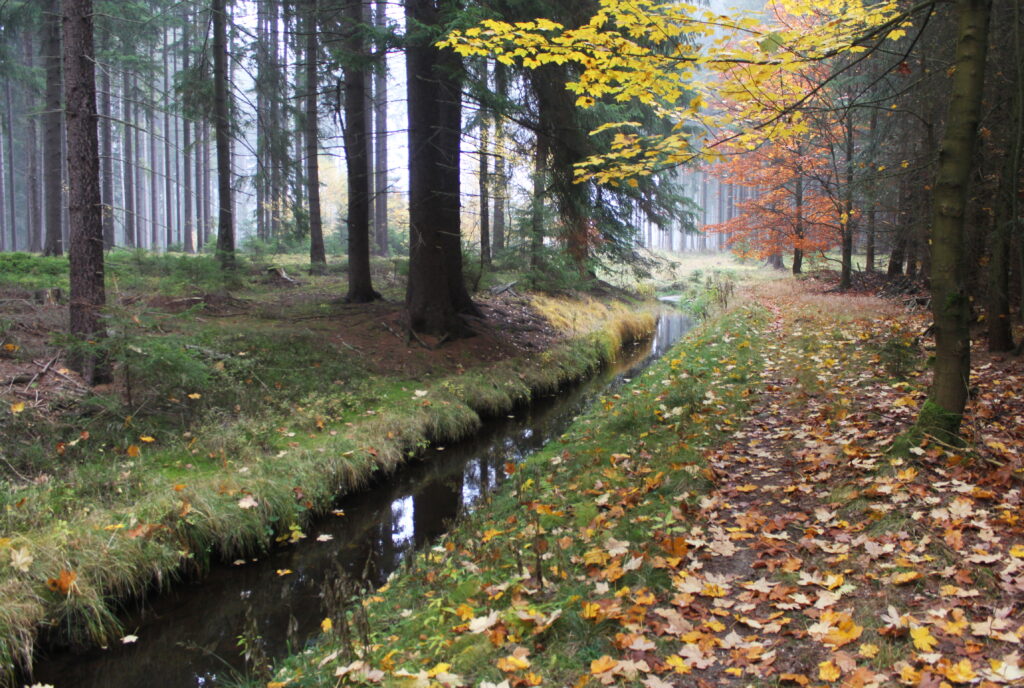
You are standing by the Long flume, an important technical monument, a reminder of the times of tin mining. The owner of the tin mines, rich feudal lord Jan Pluh from Rabštejn, set mine surveyor Rössmeisl the task of find a way how to bring much needed water to these operations. He devised a plan for a called ‘Flossgraben’ (Navigation canal), today’s Long .
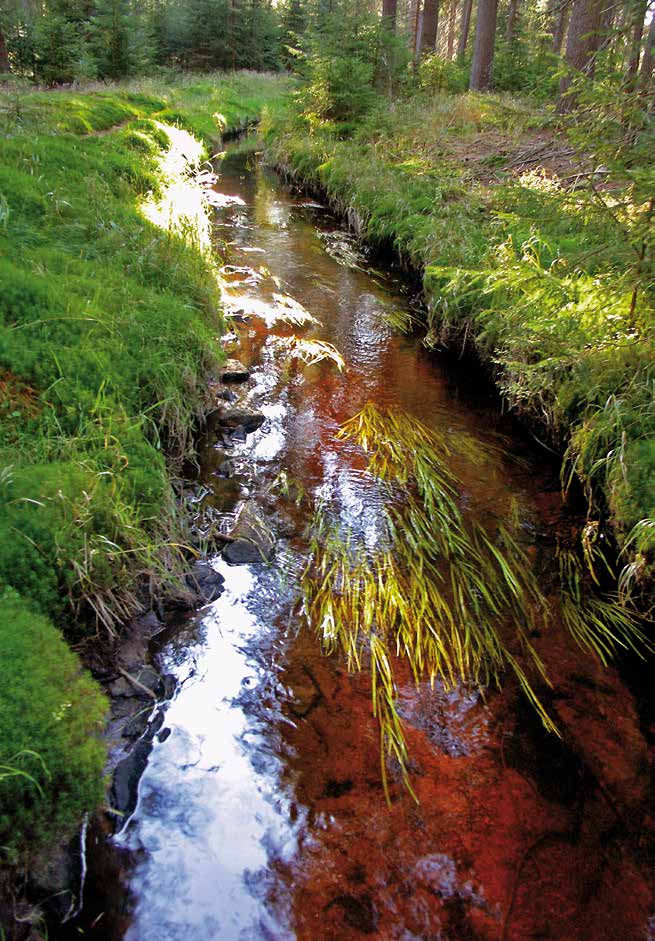
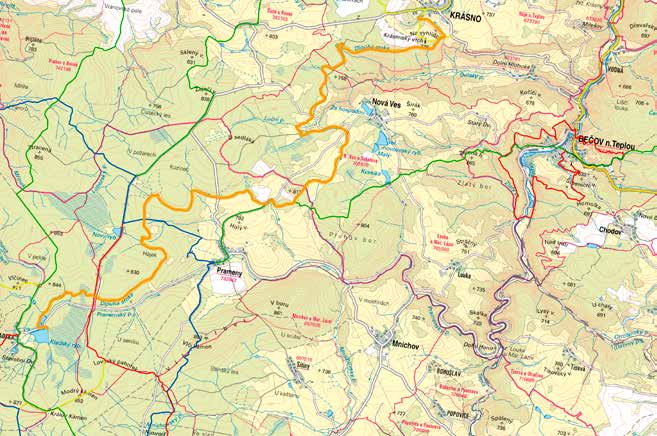
Starting at the Kladská pond, it leads to the remote village of Krásno and the town of Horní Slavkov (Upper Slavkov). The construction, of its impressive length of 24.2 km was built in six years, from 1531 to 1536. The artificial water canal was probably built in the place of older work from the end of the 14th century. Water was needed for several mining operations in the vicinity of Horní Slavkov as well as for the transport of wood, the reserves of wood in the vicinity of the mines had already been exhausted. During the 2nd half of the 16th century, in times of the greatest bloom of mining, the water system continued to be improved. It was made up of a network of canals over 30 km long which also included a system of ten large mining reservoirs.
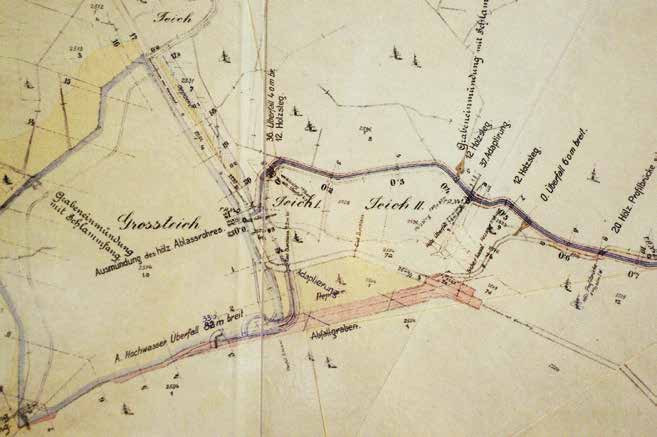
It supplied 52 ore mills, had 35 bridges, 14 locks and 2 aqueducts. The width of the flume was on average around two metres and at a depth of 1 metre. It was later lined with logs on the sides, mainly for the transport of forest timber. However, timber floating did not begin until after 1547.
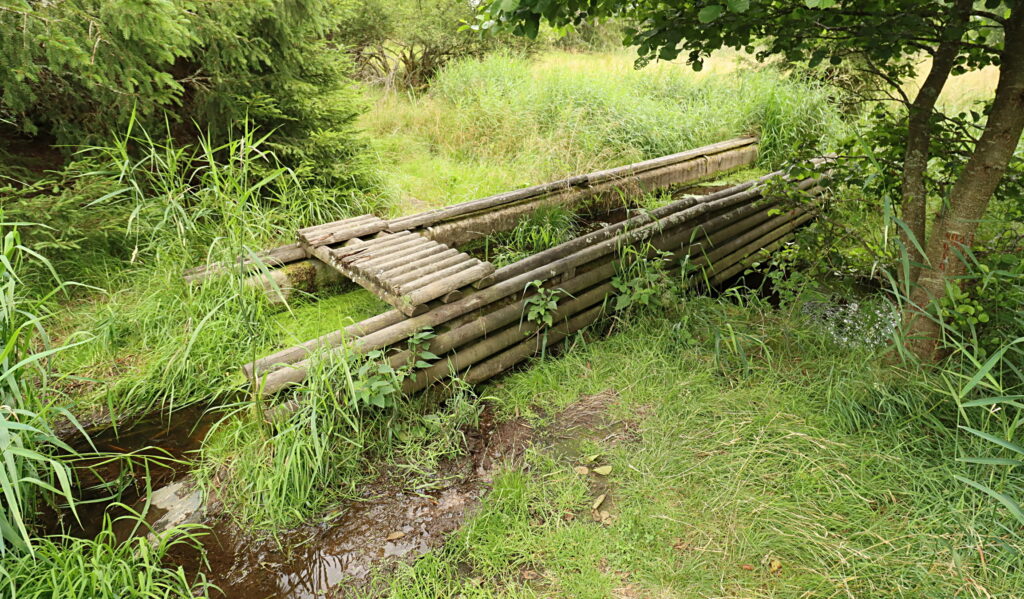
The section from Kladský pond to Dílce is especially admired by experts, where over its 21 km length, the total elevation change is just 75 metres—an impressively gentle gradient of only 35 cm per 100 metres! For its time, it was a historical hydraulic engineering project that was unparalleled in Central Europe in the 16th century in terms of both scale and construction methods. It was only later that similar canals emerged in Germany and Slovakia. After the Thirty Years’ War, tin mining in the Slavkov region started to decline. Between 1601 and 1608 the first large reconstruction took part followed by other overall alterations in 1908. After the 2nd World War, the dyke was first narrowed by partial backfilling, and the subsequent mining of uranium ores resulted in the destruction of many small waterworks. State-owned farms also contributed to the destruction by diverting the stream to water their livestock and, in some places, they even ploughed it.
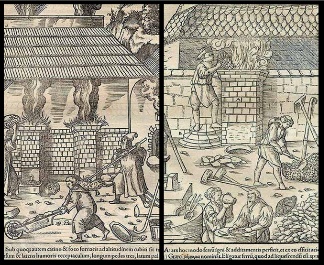
The renovation started in 2005. Nowadays the entire route of the canal is operational and passable, and the original path has been restored in some sections. Since 2003, the Long Flume has been listed as a cultural monument. Interestingly, when the army vacated the Prameny Military Training Area in 1954, the books listed the residual value of this waterworks as 0.9,- Czechoslovak crowns.
—————————————————————————————————————-
Allow yourselves to be drawn into the stories from nature and history of ‘Slavkovský’ forest
- visit also ‘The house of nature’ in Kladská!
- Follow news from nature and the history of Karlovy Vary region in their magazine Arnika on www.casopis-arnika.cz!